
Last updated: 21 November 2026
Affiliate disclosure: this site earns a commission from purchases made through links on our pages, including links to Amazon and other retailers, at no extra cost to you. Commissions do not affect our recommendations.
A note before you read: this is a spec-based review
We have not tested the EcoFlow DELTA Pro 3 in hand. This review is based only on the specifications published by EcoFlow on its US store page for the DELTA Pro 3 and in the official DELTA Pro 3 manual, and on our published guide Best Solar Generator Kits for Home Backup 2026, where this station is paired with two original EcoFlow 400W Portable solar panels as the whole-home pick. We give no score and no star rating: a score would imply a test we did not do. Where a figure was not published, weight, for example, we say so instead of guessing. The figures in this review are US figures, from EcoFlow’s US store page and the official manual. If you need a figure that is missing here, check EcoFlow’s current datasheet before you buy.
Short verdict
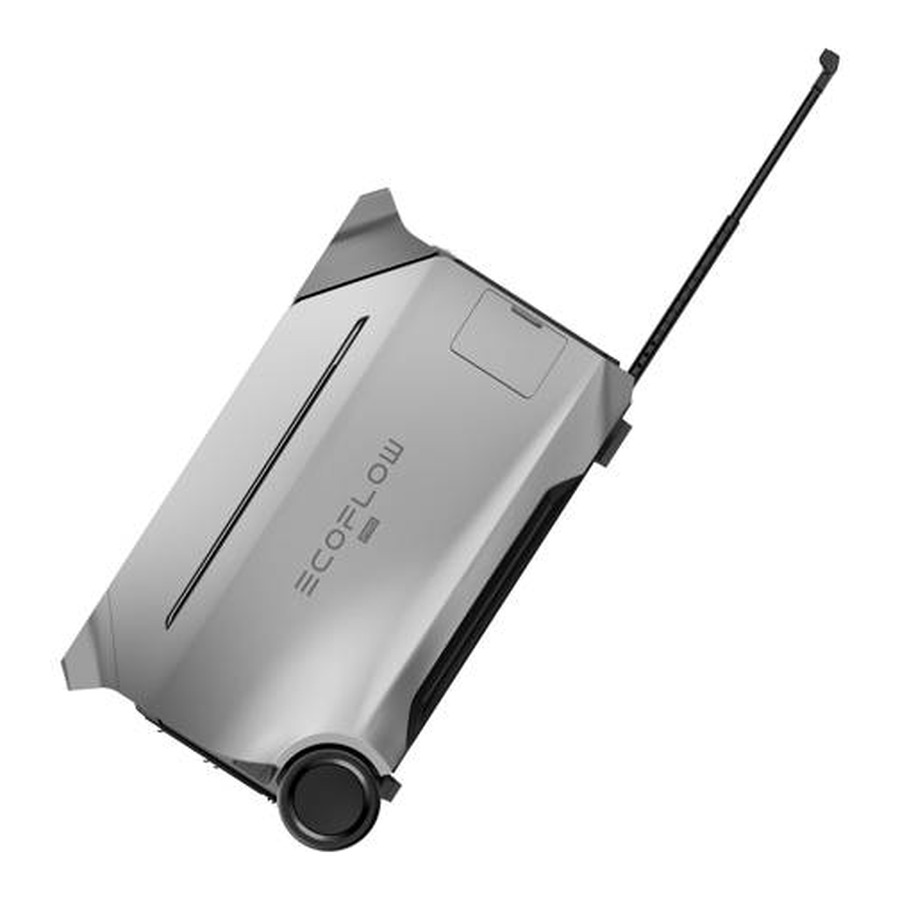
The DELTA Pro 3 is a whole-home station: 4,096 Wh of storage and 4,000 W of AC output, with 120/240 V split-phase output and room to expand to 12 kWh. The pairing in this review, two original EcoFlow 400W Portable panels wired in series on the high-voltage solar port, gives 800 W of solar, less than a third of the station’s 2,600 W solar maximum. That is deliberate: two panels are a practical starting set, and the station has room for much more panel power later.
Its main limit is the same trade-off: 800 W of panel against 4,096 Wh of battery means a full recharge from sun takes most of a good sunny day, and a long outage needs more panels to keep up. The recommended wiring for this pair of panels is both in series on the high-voltage port; wiring one panel per port also fits, see the compatibility section before connecting anything. If you want the largest station in our kits with the most room to grow, this is the pairing to check first. If you want the battery to refill from sun in a single day during a long outage, plan on adding panels.
Specifications
| Specification | DELTA Pro 3 (US figures, EcoFlow US store + official manual) |
|---|---|
| Capacity | 4,096 Wh |
| AC output | 4,000 W continuous (6,000 W with X-Boost; surge 8,000 W) |
| Maximum solar input | 2,600 W total |
| Solar ports | High-voltage port: 30–150 V / 15 A / 1,600 W max, XT60; low-voltage port: 11–60 V / 20 A / 1,000 W max, XT60i |
| Battery | LFP, 4,000 cycles to 80% |
| Battery pack | IP65 |
| UPS | 10 ms |
| Output | 120/240 V split-phase |
| Expandable | Yes, to 12 kWh |
| Paired panels | 2× original EcoFlow 400W Portable Solar Panel, 400 W each, Voc 48 V, Isc 11 A, Vmp 41 V, Imp 9.8 A, MC4 |
| Weight | Not published, check the manufacturer datasheet |
| Price | Not listed, prices change often, check the current price before buying |
Sources: EcoFlow US store page for the DELTA Pro 3 (https://us.ecoflow.com/products/delta-pro-3-solar-generator), the official DELTA Pro 3 manual (manuals.ecoflow.com), the original EcoFlow 400W Portable panel pages (https://eu.ecoflow.com/pages/portable-solar-panels and https://za.ecoflow.com/products/delta-max-solar-generator-400w-solar-panel), and the DELTA Pro 3 section of Best Solar Generator Kits for Home Backup 2026.
Check the model name before you buy
EcoFlow sells several DELTA Pro models, and the names are close. This review is for the DELTA Pro 3 with 4,096 Wh of capacity and 4,000 W of AC output. Before you buy, check the exact model name, “DELTA Pro 3”, and the capacity figure, 4,096 Wh, on the listing. The original DELTA Pro is a different model at 3,600 Wh, and the DELTA Pro Ultra is a different system again. The same care applies to the panels: this review is for the original EcoFlow 400W Portable Solar Panel, with Voc 48 V and Isc 11 A. EcoFlow also sells a different “400W Lightweight Portable Solar Panel” (Voc 39.3 V, Isc 12.2 A, XT60 connector, TOPCon cells), never mix the two panels’ specifications. Check the panel name and the Voc figure on the listing before you buy.
What it can run
4,096 Wh is enough for a fridge and the essentials for about a day, and more if your loads are small. As a rough guide: a phone charger uses a few watt-hours per charge, a laptop uses roughly 40–80 Wh per charge, and a full-size fridge can use roughly 1,000–2,000 Wh per day. A small portable camping fridge uses less than a full-size home fridge, but check its rated watts and daily consumption on its label before you rely on it.
The 4,000 W AC output covers most household appliances one at a time, a fridge, a washing machine, a microwave, a coffee maker, or a power tool, and several smaller loads together. The 120/240 V split-phase output covers larger appliances that need 240 V, which smaller stations cannot run at all. A 1,500 W kettle works on its own, and with X-Boost the station can run resistive loads up to 6,000 W. Some motors and compressors draw a short surge at start-up, the 8,000 W surge figure is the station’s short-burst limit, not its continuous output. Add up the running watts of what you plan to use at once and compare the total with 4,000 W.
Pros
- The largest station in our kits. 4,096 Wh and 4,000 W of AC output cover a fridge and the essentials for about a day, with headroom for a large appliance at a time.
- 120/240 V split-phase output. Larger appliances that need 240 V can run from this station, which smaller stations cannot do.
- By far the most room to grow. The 2,600 W solar maximum across two ports accepts much more panel power than the two 400 W panels in this review. Extra panels can be added later, provided the combined Voc and Isc stay within each port’s limits, see the compatibility section below.
- Expandable to 12 kWh. Extra batteries can be added later if 4,096 Wh is not enough for a long outage.
- Long-life battery and fast UPS. The LFP battery is rated for 4,000 cycles to 80% capacity, the battery pack is rated IP65, and the 10 ms UPS switchover covers a short outage for sensitive electronics.
- Two solar ports for different panels. The high-voltage port (30–150 V) and the low-voltage port (11–60 V) accept different panel types, so a second, different panel can be added on the free port later.
Cons
- Two panels use less than a third of the solar maximum. 800 W against 2,600 W means the pairing does not refill the battery fast. For a long outage, plan on adding panels if you want the station to recharge from sun in a single day.
- Two wirings fit this pair of panels. Both in series on the high-voltage port (recommended), or one panel per port. Series on the low-voltage port and parallel on either port do not fit, see the compatibility section before connecting anything.
- Needs an adapter cable. The panels use MC4 connectors and the high-voltage port uses XT60, so the pairing needs EcoFlow’s Solar-to-XT60 cable. It is a standard EcoFlow cable, but it is an extra item to buy.
- Weight not published. We do not list a weight we have not verified, check EcoFlow’s published weight and dimensions before you buy, especially if you plan to move this station.
- No hands-on test behind this review. Noise, build quality, the app, and real-world solar performance are not assessed here, because we have not tested this station in hand. This review covers only what the published specifications support.
Solar charging and panel compatibility
The DELTA Pro 3 accepts up to 2,600 W of solar power through two ports: a high-voltage port (30–150 V, up to 15 A, 1,600 W maximum, XT60 connector) and a low-voltage port (11–60 V, up to 20 A, 1,000 W maximum, XT60i connector). The pairing in our home-backup guide is two original EcoFlow 400W Portable panels: 400 W each, Voc 48 V, Isc 11 A, Vmp 41 V, Imp 9.8 A, MC4 connector.
The recommended wiring for these two panels is both in series on the high-voltage port (XT60). One panel per port also fits: a single 48 V / 11 A panel sits inside both ports’ limits (HV 30–150 V / 15 A; LV 11–60 V / 20 A). The wirings that do not fit are: two panels in series on the low-voltage port (96 V Voc, above the 60 V maximum); two panels in parallel on either port (22 A, above the 15 A HV and 20 A LV limits). In series, the voltages add and the current stays the same: Voc 48 V × 2 = 96 V, inside the 30–150 V range; Isc 11 A, at or below the 15 A limit; 800 W total, at or below the 1,600 W port maximum. That is a full match on the high-voltage port.
The other wirings do not fit. Two panels in series on the low-voltage port would give 96 V Voc, above the 60 V maximum, a Voc above the maximum can damage the charging circuit. Two panels in parallel on the low-voltage port would give 22 A, above the 20 A limit. Two panels in parallel on the high-voltage port would give 22 A, above the 15 A limit. Read series vs parallel panels first if you have not wired panels before, series adds voltage, parallel adds current, and either can push the combination outside the station’s limits even when each panel alone is fine.
Two things to note about the high-voltage port. First, it needs at least 30 V to start charging, one 48 V panel clears that minimum on its own, so the series pair starts charging without a problem. Second, the panels connect with EcoFlow’s Solar-to-XT60 cable, because the panels use MC4 connectors and the high-voltage port uses XT60. See our guides on EcoFlow XT60 vs XT60i and MC4 to XT60i vs XT60 for the background.
Do not mistake this pairing’s 800 W for the station’s maximum. The DELTA Pro 3 accepts up to 2,600 W of solar in total, 1,600 W on the high-voltage port and 1,000 W on the low-voltage port, and this pairing uses less than a third of it. The low-voltage port stays free in this pairing, so a second, different panel can be added there later, provided its Voc falls inside 11–60 V, its Isc is at or below 20 A, and its watts are at or below 1,000 W. Our Solar Match tool checks any panel against this station’s limits, and our compatibility guide walks through the check step by step.
A full recharge from sun takes most of a good sunny day. As a rough guide only, 4,096 Wh divided by the panels’ real-world output, two 400 W panels typically deliver around 70–80% of their rated 800 W in good sun, roughly 560–640 W, gives about 6–7 hours of good sun for a full recharge from empty. This is an estimate, not a guaranteed figure.
In poor conditions, charging will be slower than the numbers suggest. Clouds, shade, angle, and heat all reduce panel output, and a panel rarely reaches its rated watts. If charging seems slow, see our guide on why solar charging is slow and the solar charging optimisation guide before assuming something is broken.
Who it is for
- Whole-home backup where 4,096 Wh and 4,000 W cover a fridge and the essentials for about a day, with 240 V output for larger appliances.
- Extended outages where the station’s 2,600 W solar maximum and 12 kWh expansion leave room to add panels and batteries later.
- Buyers who want the most room to grow. Two ports, a high-voltage range up to 150 V, and a large solar maximum accept far more panel power than the two panels in this review.
Who it is not for
- A one-day solar refill from two panels alone. At 800 W of panel against 4,096 Wh of battery, this pairing takes most of a good sunny day to refill. For a faster refill, plan on adding panels, or see a pairing that uses more of its station’s solar maximum, such as the Jackery Explorer 2000 v2, which uses its full 400 W solar maximum with two panels.
- Light trips and camping. At 4,096 Wh, this station is a home-backup unit, not a camping station. For camping, see our roundup of the best solar generator kits for camping, for example the BLUETTI Elite 300 at 3,014.4 Wh.
- Anyone who needs a confirmed weight. The weight is not published, so if carrying weight decides your purchase, verify it on EcoFlow’s datasheet first.
Safety and limits to respect
A battery station makes no exhaust, no carbon monoxide and no fumes, so it is the only kind of generator that is safe to run indoors, in a dry, ventilated room, with its vents clear. Every fuel generator must stay outside, never in a home, garage, basement or shed. Keep this station dry, do not cover its vents, and do not charge a battery that is damaged, swollen or wet. If the station is dropped or soaked, stop using it and check EcoFlow’s guidance before charging it again.
Check the panel numbers before you connect anything. A panel combination whose Voc is above the port maximum can damage the charging circuit, and the series pair in this review (96 V Voc) fits only the high-voltage port, never the low-voltage port. Use EcoFlow’s Solar-to-XT60 cable for the high-voltage port and do not improvise connectors or join cables that were not made for this station. The 240 V split-phase output should be treated like mains power: check the appliance rating first, stay under 4,000 W continuous, and keep the station and its cables out of the reach of children.
How it compares: DELTA Pro 3 vs DELTA 3 Max Plus
The DELTA 3 Max Plus is the mid-size station in our home-backup guide, and the comparison below uses the published figures from both reviews, not a hands-on test.
- Capacity: 4,096 Wh (Pro 3) against 2,048 Wh (Max Plus). The Pro 3 holds about twice the energy, so it runs a fridge and the essentials for about three days against about a day and a half.
- AC output: 4,000 W continuous (Pro 3) against 3,000 W (Max Plus). Only the Pro 3 offers 120/240 V split-phase output for larger appliances that need 240 V.
- Solar input: 2,600 W across two ports (Pro 3) against 1,000 W across two ports (Max Plus). The Pro 3 refills far faster from sun when enough panel power is connected.
- Expansion: to 12 kWh (Pro 3) against to 10 kWh (Max Plus).
- Panel pairing: two 400 W panels in series on the high-voltage port (Pro 3) against one 400 W panel on a single port (Max Plus), with a second identical panel fitting on the free port.
Pick the Pro 3 if you need 240 V output, the longest runtime, or the most room to add panels and batteries later. Pick the Max Plus if 2,048 Wh covers your essentials, you do not need 240 V, and you want the smaller station with the lower price. Both reviews are spec-based, so neither says anything about noise, build quality or the app, which only a hands-on test could judge.
FAQ
What panels fit the DELTA Pro 3?
The pairing in our home-backup guide is two original EcoFlow 400W Portable panels (400 W each, Voc 48 V, Isc 11 A, see the note on the panel name below), wired in series on the high-voltage port, giving 800 W total. Any other panel must meet the same checks: Voc inside the port’s range (30–150 V high-voltage, 11–60 V low-voltage), Isc at or below the port’s limit (15 A high-voltage, 20 A low-voltage), total watts at or below 2,600 W. Verify any panel with our Solar Match tool before connecting it.
Why do we recommend wiring the two panels in series on the high-voltage port?
Because it is the recommended pairing for the two panels together (Voc 96 V inside 30–150 V, Isc 11 A at or below 15 A). Wiring one panel per port also fits, one 48 V / 11 A panel sits inside both ports’ limits, so series-on-HV is our recommendation, not the only wiring that works. Series on the low-voltage port would give 96 V, above its 60 V maximum. Parallel on either port would give 22 A, above both ports’ current limits (15 A high-voltage, 20 A low-voltage).
Which 400W EcoFlow panel is this, original or Lightweight?
The original 400W Portable Solar Panel, with Voc 48 V and Isc 11 A. EcoFlow also sells a different “400W Lightweight Portable Solar Panel” (Voc 39.3 V, Isc 12.2 A, XT60 connector, TOPCon cells). The two panels have different specifications, never mix them. Check the panel name and the Voc figure on the listing before you buy.
Can I add more panels later?
Yes. The station accepts up to 2,600 W of solar, and this pairing uses only 800 W. The low-voltage port is free, and more panel power can be added on the high-voltage port too, provided the combined Voc and Isc stay within each port’s limits. Check series vs parallel wiring first, and verify the combination with the compatibility checklist.
How long does it take to recharge from solar?
It depends on the panel watts, the weather, and how empty the battery is. As a rough guide only, with the two 400 W panels delivering around 70–80% of their rated 800 W in good sun (roughly 560–640 W), a full recharge from empty takes about 6–7 hours of good sun. This is an estimate, not a guaranteed figure.
Can it run a fridge?
Yes, if the fridge’s running watts and daily consumption fit the station’s 4,000 W output and 4,096 Wh capacity. A full-size home fridge can use roughly 1,000–2,000 Wh per day, which would drain about a quarter to half of the battery in a day. Check the fridge’s label and compare it with the station’s capacity and the panels’ daily output.
Can it run 240 V appliances?
Yes. The DELTA Pro 3 has 120/240 V split-phase output, which covers larger appliances that need 240 V. Check the appliance’s running watts against the 4,000 W output first.
What does the DELTA Pro 3 weigh?
Not published. We do not list a weight we have not verified, check EcoFlow’s current datasheet before you buy.
Is this review based on a hands-on test?
No. This is a spec-based review: the figures come from EcoFlow’s US store page, the official DELTA Pro 3 manual, and our home-backup guide. We have not tested this station in hand, and we give no score. See “How we verify specs” below.
How we verify specs
All specifications in this review were taken from EcoFlow’s US store page for the DELTA Pro 3 (https://us.ecoflow.com/products/delta-pro-3-solar-generator), the official DELTA Pro 3 manual (manuals.ecoflow.com), the original EcoFlow 400W Portable panel pages (https://eu.ecoflow.com/pages/portable-solar-panels and https://za.ecoflow.com/products/delta-max-solar-generator-400w-solar-panel), and the DELTA Pro 3 section of our published guide Best Solar Generator Kits for Home Backup 2026, checked on 2026-11-18. The station figures, 4,096 Wh, 4,000 W AC continuous (6,000 W with X-Boost; surge 8,000 W), 2,600 W solar total, high-voltage port 30–150 V / 15 A / 1,600 W max (XT60), low-voltage port 11–60 V / 20 A / 1,000 W max (XT60i), LFP 4,000 cycles to 80%, IP65 battery pack, 10 ms UPS, 120/240 V split-phase, expandable to 12 kWh, are US figures from EcoFlow’s US store page and the official manual; they are published figures, not a new hands-on measurement. The panel figures, 400 W, Voc 48 V, Isc 11 A, Vmp 41 V, Imp 9.8 A, MC4, are for the original 400W Portable panel, not the different 400W Lightweight panel (Voc 39.3 V, Isc 12.2 A, XT60, TOPCon). Where a specification was not published, weight, for example, we say so and do not guess. Recharge times in this review are arithmetic (capacity divided by real-world panel watts at 70–80% of rated watts) and are labelled as rough guides, not guaranteed figures. No prices are listed, because prices change often. This review is spec-based, not hands-on: we have not tested the DELTA Pro 3, and we give no score.
Closing
The DELTA Pro 3 is a whole-home station: 4,096 Wh, 4,000 W of AC output, 240 V split-phase output, and a 2,600 W solar maximum with room to expand to 12 kWh. It suits home backup and extended outages, and it does not pretend to be a camping station. Its limits are plain, two panels that use less than a third of the solar maximum, one recommended wiring for this pair, an adapter cable to buy, and an unpublished weight, and all four are worth checking against your own needs before you buy. Check any panel you plan to use with our Solar Match tool, browse the full range in our product catalogue, and see this station in its kit in Best Solar Generator Kits for Home Backup 2026. For a mid-size home-backup setup, see our EcoFlow DELTA 3 Max Plus review, and for RV use, see our roundup of the best solar generator kits for RV. For more background, see the portable energy guide hub.