
Visual Connector Guide for Portable Power Stations
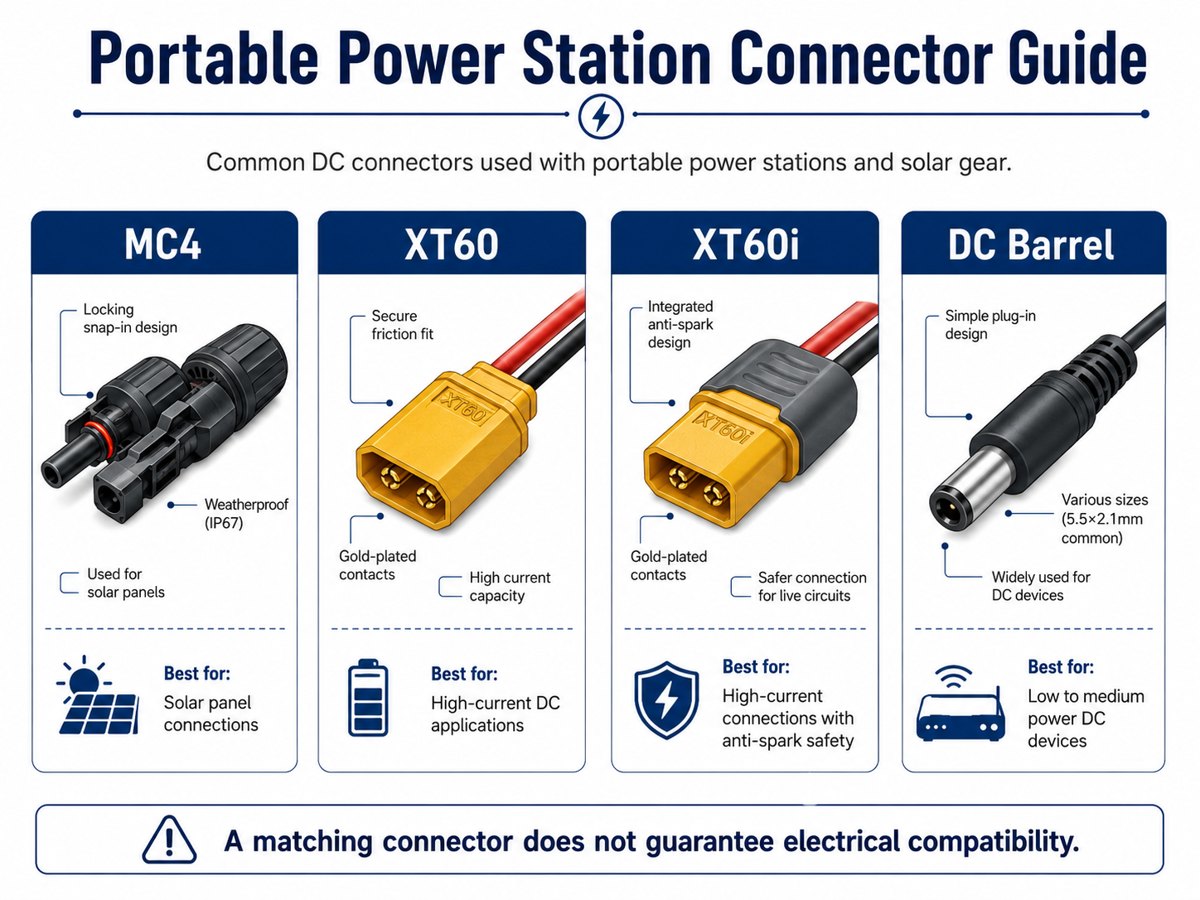
This visual connector guide helps you identify MC4, XT60, XT60i and DC barrel connectors used with portable power stations, solar panels and adapter cables.
Why Connector Type Matters
Portable power station setups often look simple from the outside, but the connector shape is only one part of the full electrical setup. A matching connector does not guarantee electrical compatibility.
Before connecting any solar panel, adapter, or extension cable, always check voltage, current, polarity, wattage, connector type, and the power station’s input limits.
Find the Hardware Type You Need
Use these quick links to jump to the most common connector and solar hardware categories.
Common Portable Power Station Connectors
This overview shows the most common connector types used in portable solar charging setups.
Common Connector Types
These are the connector types most likely to appear in portable power station solar setups, adapter cables, and solar panel outputs.
MC4 Connector
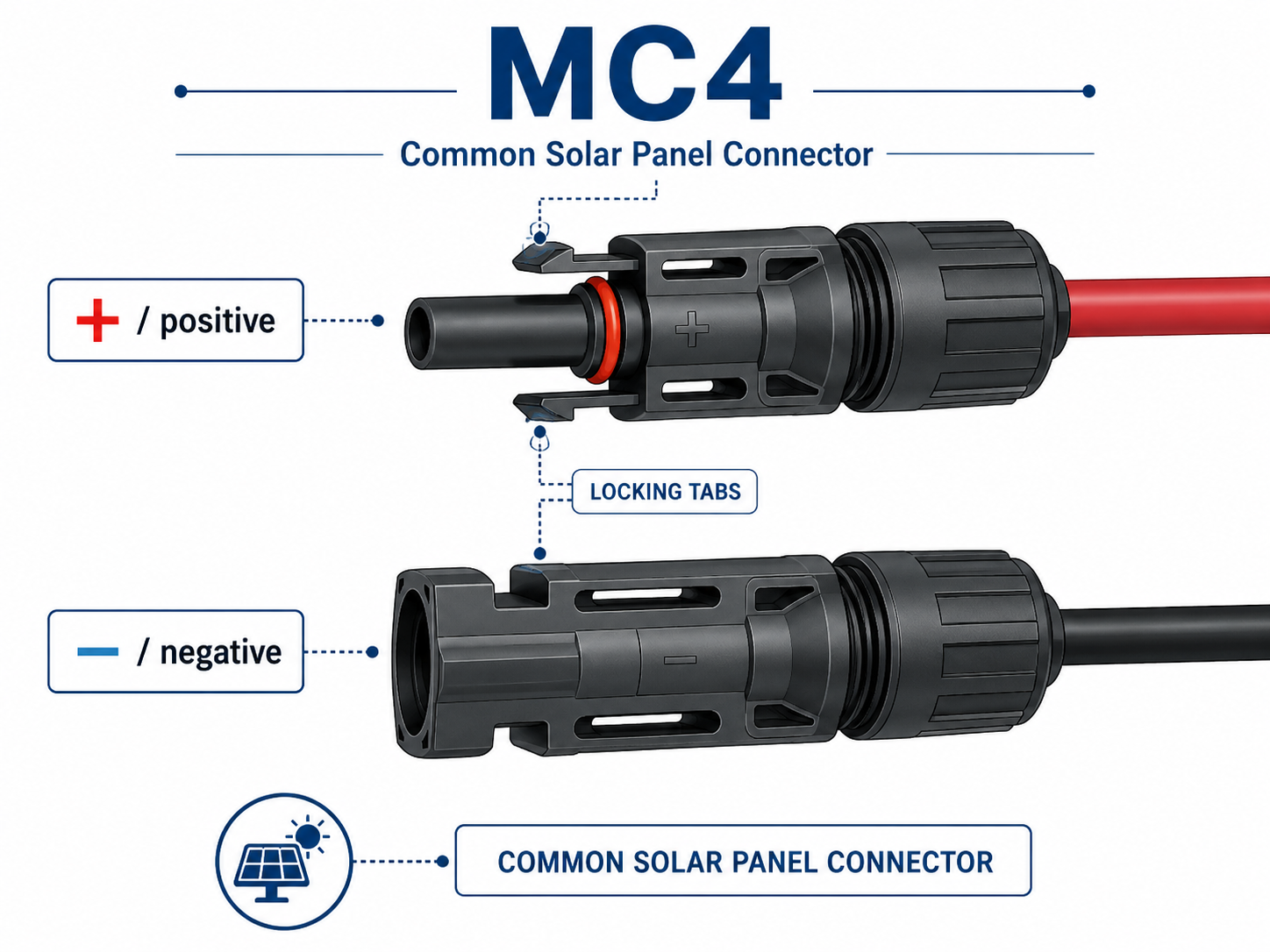
MC4 connectors are commonly used on solar panel leads. They are designed for outdoor solar connections and are often the starting point for adapter cables.
- Common use: Solar panel output leads.
- Check first: Polarity, cable quality, and adapter compatibility.
- Common mistake: Assuming MC4 automatically means compatible.
XT60 Connector
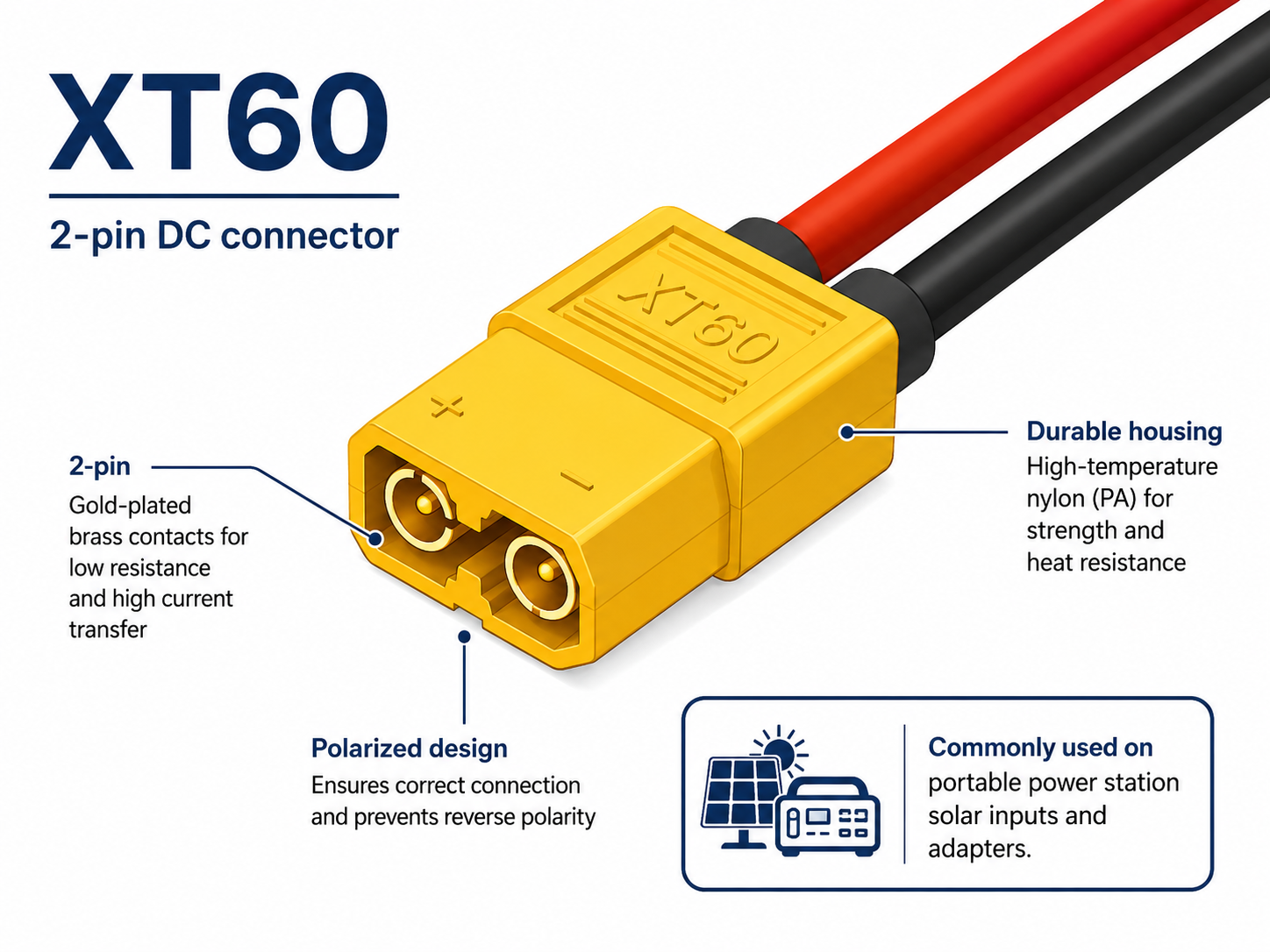
XT60 connectors are two-pin DC connectors used in many battery and solar charging setups. Some portable power stations use XT60-style solar inputs.
- Common use: DC power and solar adapter cables.
- Check first: Voltage range, current limit, and polarity.
- Common mistake: Confusing XT60 with XT60i.
XT60i Connector
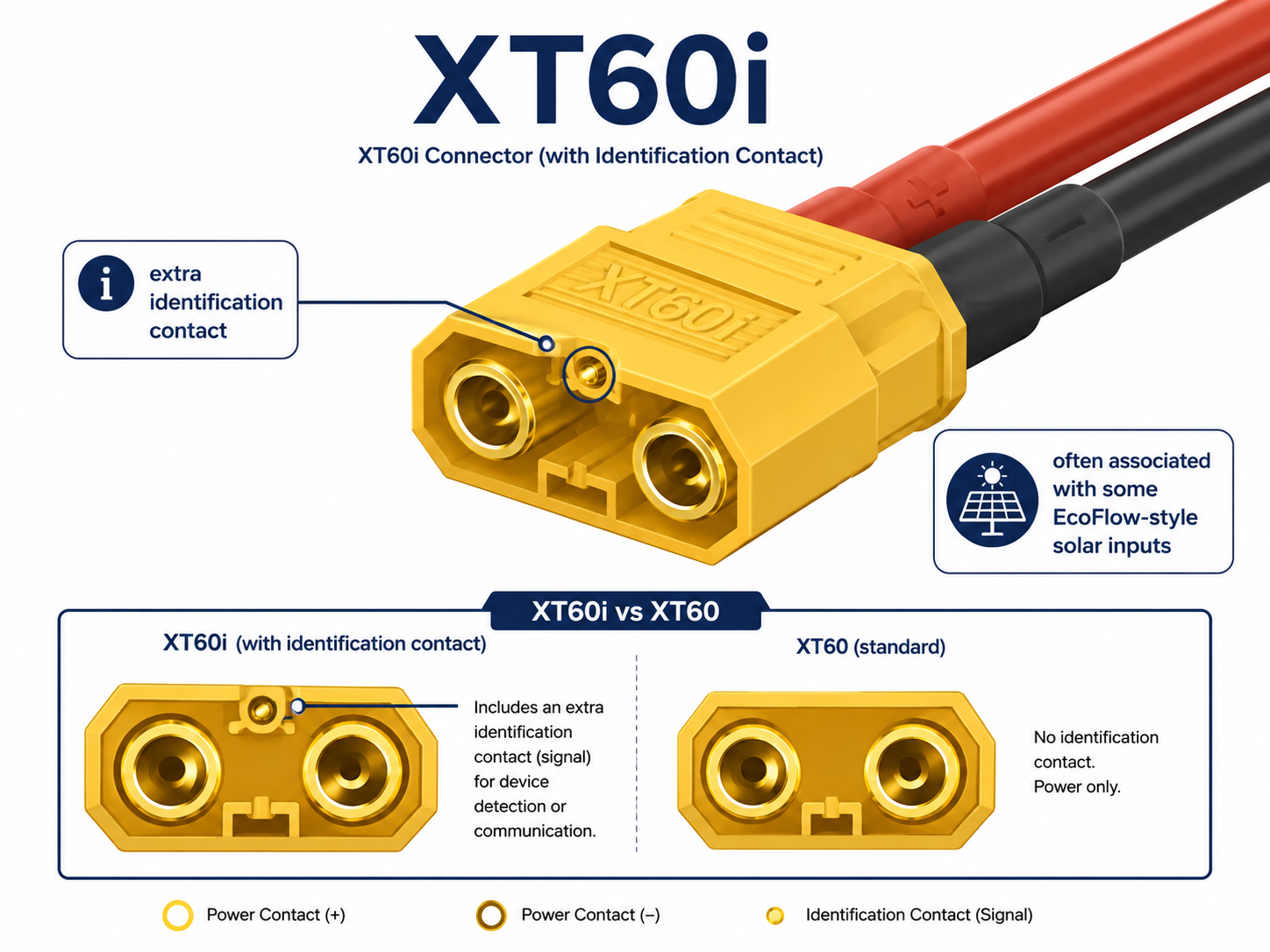
XT60i connectors look similar to XT60 connectors, but they can include an extra identification or signal contact used by some portable power stations.
- Common use: Some solar input cables and power station systems.
- Check first: Whether your model expects XT60 or XT60i.
- Common mistake: Buying only by connector shape.
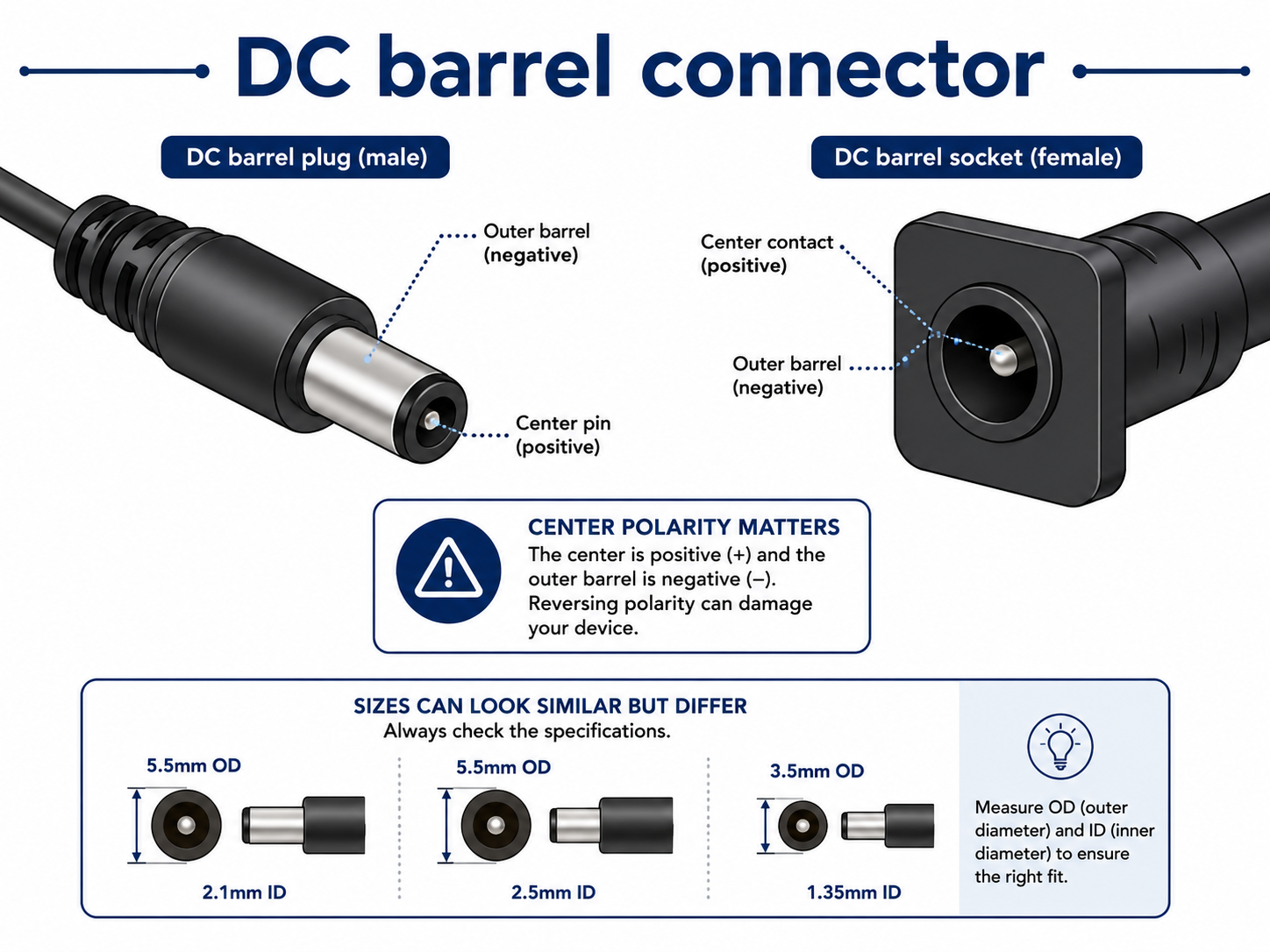
DC Barrel Connector
DC barrel connectors are round power connectors used on many smaller devices, adapters, and some power station inputs. Similar-looking plugs can have different sizes.
- Common use: DC input ports and smaller charging cables.
- Check first: Size, centre polarity, voltage, and current rating.
- Common mistake: Assuming similar barrel plugs are identical.
Common Solar Adapter Types
Adapter cables connect one connector standard to another, but they must still match the electrical requirements of the solar panel and portable power station.
MC4 to XT60 Adapter
Used when a solar panel has MC4 output leads and the portable power station accepts a standard XT60-style solar input.
Read the hardware guideMC4 to XT60i Adapter
Used with some systems where XT60i cable behaviour or identification may affect solar input detection.
Read the XT60i guideMC4 Extension Cable
Used to increase the distance between the solar panel and the power station, but cable length and gauge can affect charging performance.
Read the optimisation guideMC4 to DC Barrel Adapter
Used for some smaller or model-specific DC inputs, but barrel size and center polarity must be checked carefully.
Read the DC barrel guidePortable Solar Panel Connection Types
Different solar panel formats can use different output leads, connector styles, and electrical specifications.
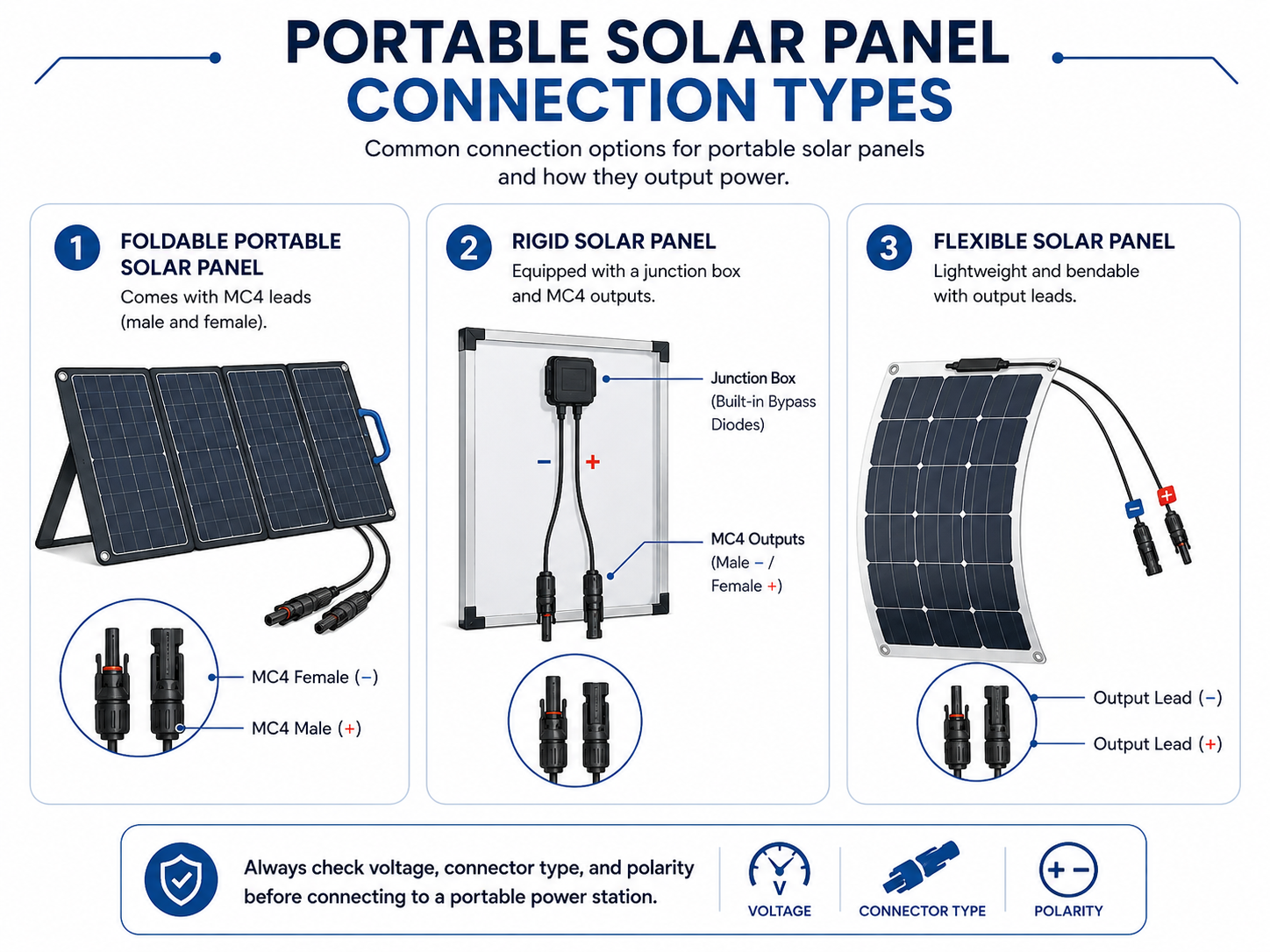
Foldable Solar Panels
Often used with portable power stations because they are easy to carry and store. Many include MC4 leads or brand-specific adapter cables.
Rigid Solar Panels
Common in fixed or semi-permanent setups. They usually require careful checking of open-circuit voltage before connecting to a portable power station.
Flexible Solar Panels
Lightweight panels used in mobile or curved-surface setups. Cable quality, polarity, and connector durability should be checked carefully.
Portable Power Station Solar Inputs
The connector on the power station side is only one part of compatibility. Always compare the solar panel specifications with the power station input limits.
XT60 Input
Common on some portable power stations and adapter cables. Check voltage, current, and polarity before connecting.
XT60i Input
Similar-looking to XT60, but the cable behaviour may matter for some power station systems.
DC Barrel Input
Round input ports can vary by size, polarity, and rating. Never assume two barrel connectors are the same.
Check These Before Connecting Solar Hardware
Connector shape is only the beginning. Use this checklist before connecting panels, adapters, extension cables, or power station inputs.
- Check the portable power station’s solar input voltage range.
- Check the solar panel open-circuit voltage.
- Check maximum input current and wattage.
- Confirm positive and negative polarity.
- Confirm whether the unit expects XT60, XT60i, DC barrel, or another input.
- Check cable gauge and cable condition.
- Do not assume that a matching connector means electrical compatibility.
- Stop and check the manual if you are not sure.
Use the Connector Guide Before Buying Adapters
Before buying a cable, adapter, or solar panel, confirm the connector type, input limits, voltage, current, wattage, and polarity. This guide is a starting point for safer portable solar charging decisions.
If your EcoFlow solar charging is stuck at 8A, the connector is often the cause.
Quick Troubleshooting Path for Connector Issues
If you’re troubleshooting a connector, adapter or charging issue, work through these checks in order rather than swapping hardware at random:
- Identify the connector on both the solar panel and the power station.
- Check polarity before connecting anything.
- Check the power station’s solar input voltage, current and wattage limits.
- Check the solar panel’s Voc, Vmp and current values.
- Check that the adapter or cable matches both connectors and is rated for the expected current.
- Test the setup in stable, direct sunlight rather than judging from a single reading.
A matching connector confirmed in step 1 does not replace steps 2 through 6 — connector fit and electrical compatibility are separate checks, and skipping ahead is the most common cause of avoidable damage or wasted troubleshooting time.